


Studio monitors matter a lot if you record music, podcasts, voice-overs, or YouTube videos at home. Regular multimedia speakers color the sound, so your mix sounds different on headphones, car speakers, or a phone. Studio monitors try to stay honest, so you hear flaws early and fix them before release. For Indian creators working from small rooms or rented flats, a compact nearfield monitor gives you better control without needing heavy treatment or a big setup.
When you choose studio monitors in India, you have to think about driver size, power, room size, connectivity, and how neutral the sound feels. You also need to factor in local service support, reliability in hot and humid conditions, and how easy it is to plug them into your existing interface, laptop, or TV. Many of us want something that works for both mixing and casual music listening, without burning a hole in the pocket. The models below fit that practical, Indian-use mindset. All five pairs are active monitors, so you do not need a separate amplifier, and they are sized for typical Indian bedrooms and small studio rooms.
hayden E-3.5BT

Compact 3.5 inch Bluetooth studio monitors made for tight home setups and simple desk use.
Pros
- Small footprint for cramped desks and PG rooms
- Bluetooth 5.0 for wireless playback from phone or laptop
- Multiple inputs including TRS, RCA, and aux
- Acoustic tuning controls to adjust to your room
Cons
- 3.5 inch woofer has limited low bass
- Class AB design runs a bit warmer than Class D options
- Not ideal for large rooms or far-field listening
- Brand is still new so long term reliability is less proven
Hayden E-3.5BT targets beginners and home creators who sit close to the speakers on a study table or compact workstation. The 3.5 inch woofer stays punchy enough for YouTube work, podcast editing, and light music production, as long as you do not expect deep club-style bass. The 1 inch silk dome tweeter gives a smooth top end, which helps if you work long hours and want less ear fatigue in a small, reflective Indian room with bare walls and tiles.
Bluetooth 5.0 is handy when you want to switch from your laptop DAW session to chilling with Spotify on your phone without extra cables. At the same time, you still get proper TRS and RCA inputs, so for serious work you can hook them to an audio interface or mixer. Acoustic tuning on the rear lets you cut or boost frequencies to match your desk and wall distance, important in typical Indian bedrooms where one speaker sits near a corner or a wall, causing boominess.
Hayden is still building its name in India, but the E-3.5BT is aimed at value-focused buyers who want a clean-looking pair with basic room control. Service and parts availability are improving in metros first, so buyers in Tier 2 cities should check local support before purchase. For students, small YouTubers, and singers recording over karaoke tracks, this pair gives a balanced start without overcomplicating the setup.
Audio Array AM-S1 BT
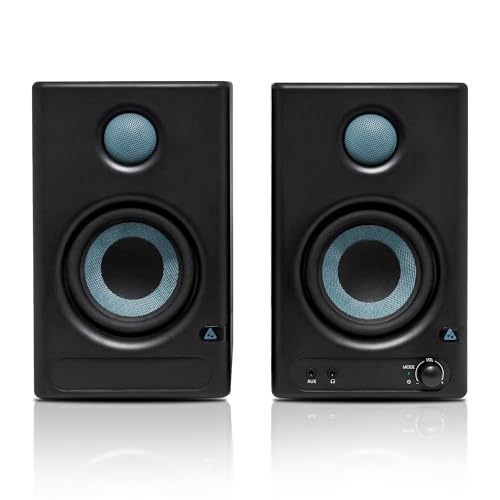
4 inch studio monitor pair with strong connectivity, EQ controls, and Bluetooth 5.3 for hybrid studio and entertainment use.
Pros
- 4 inch woofer gives better low end than 3.5 inch rivals
- Huge connectivity list including HDMI ARC and USB C
- Music and Monitor modes for flexible sound
- Built in protection against heat and power issues
Cons
- Takes more desk space than 3.5 inch models
- Many input options can confuse beginners at first
- Sound character changes between modes, needs learning
- Brand visibility still limited outside online platforms
Audio Array AM-S1 BT suits users who want one pair of speakers for everything. You get a 4 inch woven composite woofer and a 1 inch silk dome tweeter, which together cover a wide 60 Hz to 20 kHz range. For home mixing and content creation this gives you better bass detail than smaller 3.5 inch units, helpful when you work on Indian genres with strong dhol, bass guitar, or electronic kick patterns.
The standout part is connectivity. You can hook these up to a TV using HDMI ARC, to a laptop with USB C, to an interface through TRS or RCA, or stream from your phone on Bluetooth 5.3. There is also a 3.5 mm headphone jack at the front. For many Indian homes where one desk doubles as editing station, OTT viewing spot, and casual gaming corner, this flexibility makes life easier. EQ controls let you adjust high and low frequencies, so you can tame bright rooms with tiles and glass or lift some highs in heavily curtained rooms.
Built in protection for overheating, RF interference, and power surges is useful for Indian power conditions, especially in areas with frequent voltage fluctuations. Audio Array as a brand focuses on online buyers, and service is tied to central centers and courier pickup in most cities. If you want modern connectivity and you mix plus binge watch from the same seat, AM-S1 BT fits that mixed-use pattern well.
Edifier MR4
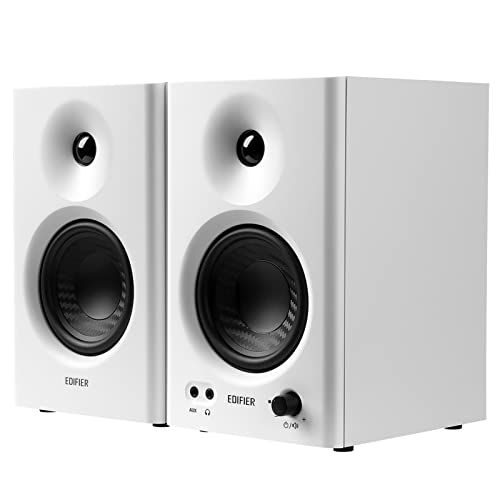
4 inch nearfield studio monitors with MDF wooden cabinets aimed at content creators who want neutral sound and clean design.
Pros
- MDF wooden cabinets reduce unwanted resonance
- Monitor and Music modes for work and fun
- Front headphone out and aux in for quick access
- Simple TRS, RCA, and aux connectivity
Cons
- No Bluetooth or HDMI options
- Bass is controlled, not for heavy bass heads
- White finish needs more care in dusty rooms
- Limited onboard EQ compared to some rivals
Edifier MR4 takes a more traditional studio monitor approach. You get a 4 inch woofer and 1 inch silk dome tweeter inside MDF wooden cabinets. Wood helps control cabinet resonance and gives a slightly more natural tone, which suits long editing sessions in small Indian rooms where reflective surfaces can make plastic boxes sound harsh. The frequency response feels smooth, which helps you judge vocals and midrange instruments clearly.
You get two sound modes. Monitor mode keeps things flatter for mixing and editing, while Music mode adds a bit of warmth for casual listening. This dual role works well if you use the same desk for work and Netflix breaks. The front aux input and headphone output save you from reaching behind the speakers each time, handy if your desk is against a wall, which is common in hostel rooms or compact apartments.
Connectivity is simple and studio friendly, with TRS and RCA inputs for interfaces, mixers, and computers. There is no Bluetooth or HDMI, so these suit users who are comfortable with wired setups and want stable, predictable sound. Edifier has a decent service presence in India, with support centers in major cities and partners in many Tier 2 locations. For creators who care more about consistent monitoring than extra features, MR4 is a safe and sensible pick.
hayden X5

5 inch professional reference monitors with Kevlar woofers and acoustic foam pads included for cleaner desk setup.
Pros
- 5 inch Kevlar driver handles higher volumes and deeper lows
- Acoustic room switch helps reduce boom in small rooms
- XLR and TRS inputs for proper studio wiring
- Foam pads included to cut desk vibrations
Cons
- Larger size demands more space from the listener
- No Bluetooth or consumer focused inputs like HDMI
- Needs some distance from walls for best sound
- Hayden service network still growing across India
Hayden X5 targets users stepping into serious mixing and production who still work in modest Indian rooms. The 5 inch Kevlar low frequency driver gives tighter and deeper bass than 3.5 or 4 inch options, so you hear kick and bass lines with more authority. The silk dome tweeter keeps treble smooth without harshness, which matters if your ceiling is low and walls are bare, as is common in many rented flats.
An acoustic room switch on the back lets you reduce boom by cutting low frequencies by about 4 dB for smaller rooms. If your monitors sit close to a wall or on a hollow desk, this helps you control the mud in the low mids. Hayden also includes a pair of acoustic foam pads in the box. Placing each speaker on a pad reduces vibrations going into the table, so you hear the speaker instead of the desk rattling. This is a simple but helpful addition for Indian setups that use basic wooden or metal study tables.
Connectivity stays focused on studio work with XLR and 6.35 mm TRS line inputs, so pairing with an audio interface or professional mixer is straightforward. There are no Bluetooth or HDMI options, which keeps signal paths clean. Hayden is still growing its service and distribution network in India, with better coverage in bigger cities at present. For producers who are ready to treat their room a bit and want a more serious reference, X5 offers strong performance per rupee with practical tuning tools included.
PreSonus Eris 3.5 2nd Gen

Compact 3.5 inch studio monitors from a well known audio brand, with tuning controls for small rooms.
Pros
- Trusted studio brand with strong global reputation
- 50 W Class AB power with good peak output
- Acoustic tuning for high and low frequencies
- Multiple inputs including TRS, RCA, and aux headphone out
Cons
- 3.5 inch woofer limits sub bass detail
- Class AB design runs a bit warm in hot climates
- No built in Bluetooth or HDMI
- Rear panel controls need some learning time
PreSonus Eris 3.5 2nd Gen is aimed at creators who want a compact monitor from a known studio brand. The 3.5 inch woven composite woofer and 1 inch silk dome tweeter deliver a clear midrange and detailed highs. For small Indian bedrooms and home studios, this size fits easily on a narrow desk or wall shelf while still reaching a peak level around 98 dB, enough for nearfield listening.
You get Class AB dual amplification with an 80 Hz to 20 kHz frequency response. That means you miss the lowest sub bass, but you still hear the important punch range for most genres, including Bollywood, regional pop, and indie. Acoustic Tuning controls on the back let you adjust both high and low frequencies so you can correct for desk reflection or wall proximity. This helps if your room is not acoustically treated and has uneven surfaces, which is the reality for most Indian homes.
Connectivity is flexible with balanced TRS, unbalanced RCA, and a front 3.5 mm input along with a headphone output. PreSonus has better brand recognition and support through pro audio dealers and distributors in India, especially in metro cities. For beginners who want a known name with practical tuning features and do not need wireless, Eris 3.5 2nd Gen feels reliable and work focused.
Buying Guide
Set a realistic budget for your Indian setup
Before you choose a pair, decide how serious your work is and how long you plan to keep the monitors. For hobby use and small YouTube channels, entry level 3.5 inch and 4 inch monitors like hayden E-3.5BT or PreSonus Eris 3.5 2nd Gen usually do the job. If you produce full songs, electronic music, or commercial work, moving to 4 inch or 5 inch options like Audio Array AM-S1 BT, Edifier MR4, or hayden X5 makes sense. Factor in stands, basic room treatment, and a UPS or surge protector in your total spend, since Indian power supply can be unstable in many areas.
Choose driver size based on room and genre
Driver size affects how much low end you hear and how far you can sit from the speakers. In a small 8×10 or 10×12 Indian bedroom, 3.5 inch or 4 inch monitors often work better because they fight less with the room and are easier to place away from walls. If you work on bass heavy music or need more headroom and your room is slightly bigger, 5 inch monitors give a more complete picture. Do not pick the largest size blindly, because too much low end in an untreated tiny room leads to confusing mixes.
Understand technical specs that matter
Key specs to check include frequency response, amplifier power, maximum SPL, and input types. A range that starts around 60 to 80 Hz is fine for small monitors, as long as the response is even and not hyped. Class D amps run cooler and are more power efficient, useful in Indian summers and long work hours, while Class AB often has a slightly different character but generates more heat. Maximum SPL tells you how loud the monitor goes at 1 meter, helpful if you sit at a distance or have some background noise from fans and traffic. Input options like TRS, XLR, RCA, USB C, and HDMI will decide how easily you connect your gear without extra converters.
Check connectivity for your workflow
Think about your main devices. If you use an audio interface with balanced outputs, look for TRS or XLR. If your primary source is a laptop without an interface, RCA or 3.5 mm aux might be enough at the start. For people who want to use monitors with a TV, consoles, or phone, models with Bluetooth or HDMI ARC like Audio Array AM-S1 BT provide more freedom. A front headphone jack and aux in add day to day convenience when you switch between noise sensitive late night work and daytime monitoring.
Match performance to Indian rooms and climate
Indian homes often have hard floors, minimal carpets, and big windows, which reflect sound. Monitors with basic acoustic tuning, like high and low frequency knobs or room switches, help you adapt to these conditions. Hot summers and long power cuts mean your speakers face heat and inconsistent power. Models that mention thermal protection, RF filtering, and surge protection handle these conditions better. Simple steps like leaving space around rear ports for airflow, avoiding direct sunlight, and using a good spike guard extend life.
Look at build quality and materials
Cabinet material, driver cone type, and knobs or switches all affect durability. MDF cabinets like on Edifier MR4 reduce vibration and feel more solid than thin plastic boxes. Kevlar or woven composite woofers tend to stay stable under stress and keep their shape for longer. Front panels with clean knobs and limited wobble feel better in day to day use. For Indian conditions with dust and humidity, controls should feel tight and connections should not loosen easily. If you shift houses often, slightly smaller and lighter models are easier to pack safely.
Do not ignore warranty and service network
Before you hit buy, check warranty length, process, and how service works in your city. Known pro audio brands like PreSonus and Edifier usually have authorised service partners in metro areas and some Tier 2 cities. Newer Indian focused brands like Hayden and Audio Array handle support through online channels and central service points. Ask about pickup and drop options, typical repair times, and availability of spare parts like tweeters and amps. This matters in India because shipping big heavy boxes back and forth is painful if service is far away.
Plan basic room placement and accessories
Even the best monitor sounds poor in the wrong spot. Try to place your speakers at ear level, forming an equilateral triangle with your listening position. Keep some distance from rear walls, especially for rear ported designs, to reduce boom. In a small Indian bedroom you can use simple foam pads like the ones included with hayden X5 or buy budget stands to decouple the speakers from your desk. Affordable acoustic panels or even thick curtains and bookshelves help reduce reflections and make your monitoring more reliable.
Feature Importance
| Feature | Importance |
|---|---|
| Driver size (woofer diameter) | High |
| Frequency response and tuning controls | High |
| Room size suitability | High |
| Connectivity options (TRS, XLR, RCA, HDMI, Bluetooth) | High |
| Build quality and cabinet material | Medium |
| Brand service network in India | High |
| Amplifier type and power rating | Medium |
| Physical size and desk space needed | Medium |
| Extra features (modes, headphone out, foam pads) | Medium |
| Finish color and aesthetics | Low |