Smart plugs with energy monitoring solve two common home problems. They let you switch appliances from your phone, and they show how much electricity each device uses. For Indian homes where geysers, microwaves, ACs, routers, and kitchen appliances often stay plugged in for long hours, this type of control makes a clear difference in convenience and monthly power use.
When you choose one, focus on the amp rating first. A 16A smart plug suits heavy appliances like geysers and some microwaves, while a 6A model fits lighter loads like lamps, chargers, TVs, and routers. After that, check app quality, scheduling options, voice assistant support, energy tracking detail, safety protection, and plug size. In India, socket compatibility matters a lot because many homes use a mix of 6A and 16A points.
I also feel service support matters more here than many buyers expect. Wi-Fi devices work well when setup is smooth, but if you face pairing issues, firmware bugs, or load-related doubts, a brand with decent support saves time. The five options below cover both heavy-duty and compact use cases, so you can pick one based on your appliance type and your daily routine.
Wipro 16A Wi-Fi Smart Plug

A solid 16A smart plug for heavy appliances, with app control, voice support, scheduling, and built-in energy monitoring. It suits users who want a familiar Indian brand for geyser or AC automation.
Pros
- 16A rating suits large appliances
- Energy monitoring built in
- Works with Alexa and Google Assistant
- Scheduling helps daily automation
Cons
- Bulky size may crowd some sockets
- Depends on stable Wi-Fi for full smart use
- App experience may feel basic to some users
- Best suited to 16A sockets only
The Wipro 16A Wi-Fi Smart Plug is aimed at one of the most common Indian use cases, running a geyser on a morning schedule and switching it off without walking back to the bathroom or utility area. It also fits other higher-load devices like microwave ovens and selected air conditioners, as long as the socket and appliance load match the plug’s rating. The energy monitoring function adds practical value because you are not guessing anymore. You get a better sense of which appliance is drawing more power during daily use.
What I like here is the simple feature mix. Remote control, scheduling, and voice commands cover what most homes need. If you already use Alexa or Google Assistant, the setup feels more useful in day-to-day life. A timed routine for geysers during winter, or fixed on-off hours for a water dispenser, makes this plug more than a gadget. For families trying to cut waste, the usage data is handy for spotting appliances left on longer than needed.
Wipro has decent recall in the Indian electrical market, and that helps first-time buyers feel more comfortable. Service reach and brand familiarity are better than many unknown smart-device labels. This does not mean every support case is perfect, but the brand is easier to trust for a mainstream Indian home. For buyers who want a heavy-duty smart plug without trying a less familiar name, this one makes good sense.
Tapo P110 16A Smart Plug

The Tapo P110 is a feature-rich 16A smart plug with real-time energy tracking, compact design, and a polished app. It is one of the better picks for users who want clean software and strong everyday usability.
Pros
- Real-time energy monitoring in the app
- Compact body avoids blocking nearby sockets
- Supports schedule, timer, and away mode
- Easy setup with Alexa and Google Assistant
Cons
- Needs 16A socket for intended heavy-load use
- No Apple Home support in this version
- Advanced routines depend on app ecosystem
- Wi-Fi setup may take a few tries in some homes
The Tapo P110 stands out because the app side feels well thought out. Remote control is standard in this category, but Tapo adds useful extras like away mode and countdown timers in a way that feels easy to use. For Indian users who want to automate a geyser before bath time, set microwave cut-off routines, or track the running pattern of a room heater, this plug gives a cleaner daily experience than many generic options.
Its compact shape is another plus. Smart plugs often become annoying when they block the next socket or stick out too much from the wall. The P110 keeps things neater, which helps in tight switchboard layouts often seen in Indian flats. Energy monitoring is also well presented. If your goal is to identify hidden power use from devices that stay active for long hours, the app data is more useful than a simple on-off smart plug.
TP-Link’s Tapo line has built a good name in India in routers, cameras, and smart home gear. That larger ecosystem helps. If you already use Tapo devices, adding this plug feels natural. Brand support is usually easier to access than smaller import labels, and firmware support tends to be more consistent. For many buyers, this balance of software quality, safety focus, and compact hardware makes the P110 one of the safest choices in this list.
Blackt Electrotech BT72PM3
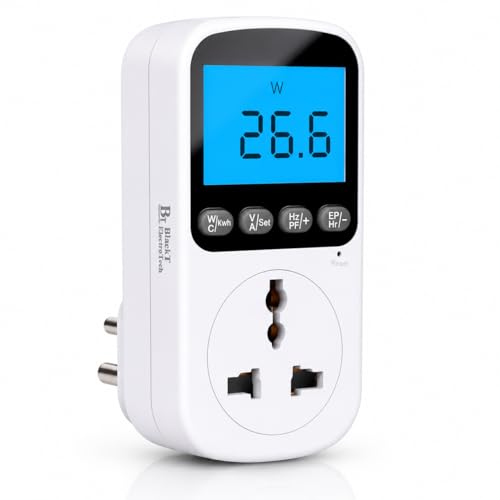
This is a plug-in digital energy meter rather than a full app-based smart plug. It suits buyers who mainly want to measure power use, voltage, current, and unit consumption in a direct, screen-based format.
Pros
- Shows watts, volts, amps, kWh, and cost on LCD
- Plug-and-play use with no app needed
- Useful for testing appliance power draw
- Suitable for home and office monitoring
Cons
- No Wi-Fi or remote app control
- No voice assistant support
- Design is more utility-focused than modern smart plugs
- Socket and amp fitment details need careful checking
The Blackt Electrotech BT72PM3 takes a different route from the other products here. Instead of focusing on app automation, it works as a practical electricity usage monitor with an LCD screen. You plug an appliance into it and check real-time readings like watts, volts, amps, and cumulative kWh. For many Indian users, this direct method is easier to trust because the numbers are right there on the screen, no phone setup, no account login, no Wi-Fi pairing.
This type of device is especially useful if your main goal is diagnosis. Say your refrigerator seems to run more than expected, or your old desktop setup feels heavy on electricity use. A meter like this helps you test one appliance at a time and understand the load pattern. It is also useful for small offices, workshops, and home users who want to compare devices before deciding what to replace or what to run less often.
The trade-off is simple. You do not get remote switching, voice commands, or app routines. This is more of a measurement tool than a smart home accessory. If your purpose is energy auditing, though, it does that job well. For Indian buyers who care more about electricity tracking than automation, the BT72PM3 fills a different but useful role. Since this is a lesser-known brand, after-sales reach may not match bigger names, so buy this one mainly for its function-first value.
AZIOT 16A Smart Plug
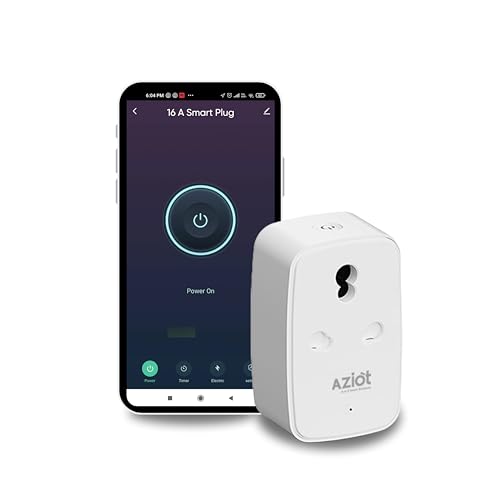
AZIOT offers a 16A smart plug with energy monitoring, Wi-Fi plus Bluetooth connectivity, and safety features like surge and overload protection. It suits buyers who want strong feature coverage for heavy appliances.
Pros
- Wi-Fi and Bluetooth support helps setup and control
- Energy monitoring and scheduling included
- 3KV surge protection and overload safety
- Made in India positioning with 16A appliance support
Cons
- Brand reach is smaller than top network brands
- App polish may vary compared to bigger ecosystems
- Bulky form factor is possible in compact boards
- Voice ecosystem is limited to common assistants
The AZIOT 16A Smart Plug is built for practical Indian household use. The main attraction is the mix of heavy-load support, energy monitoring, and dual connectivity through Wi-Fi and Bluetooth. Bluetooth support is useful during setup or in situations where internet behavior is unstable. In many homes, especially those with thick walls or patchy router placement, that extra connectivity path makes setup less frustrating.
Safety features matter more in this category than many people think. High-load appliances like geysers and microwaves draw serious current, and features like surge protection and overload safeguards add peace of mind. If you live in an area where voltage fluctuations are common during summer or monsoon, this kind of protection is worth paying attention to. The scheduling feature also helps with daily routines. A timed geyser cycle in winter or an automatic cut-off for a room appliance saves effort and avoids waste.
AZIOT also markets this as a made-in-India product with after-sales support, and for some buyers that matters a lot. Smaller brands often compete by offering more direct support and simpler communication. The flip side is that app maturity and long-term software updates may not match larger global ecosystems. Even so, for users who want a heavy-duty smart plug with broad features and an India-focused approach, this model deserves a close look.
Tapo P116M Mini Smart Plug

The Tapo P116M is a compact 6A smart plug for smaller appliances, with energy monitoring and Matter support. It is a smart choice for users who want broad platform compatibility in a tiny form factor.
Pros
- Matter support works with major smart home platforms
- Compact size suits crowded switchboards
- Energy monitoring available for small appliances
- Good for lights, routers, chargers, and TVs
Cons
- 6A rating is not for heavy appliances
- Less suitable for geysers or large kitchen devices
- Feature value depends on smart home setup
- Needs stable Wi-Fi for best experience
The Tapo P116M is the smallest and most flexible plug in this list, but it serves a different job. This is a 6A plug meant for lighter appliances, not large loads. If you want to automate a bedside lamp, Wi-Fi router, TV, set-top box, air purifier, aquarium filter, or phone charging routine, this type of plug makes more sense than buying a bulky 16A model. The small body is a major win in Indian homes where switchboards often sit behind furniture or have little space between sockets.
Its biggest strength is Matter support. If your home setup includes Apple Home, Alexa, Google Home, or SmartThings, this plug fits into more ecosystems without locking you into one brand. That gives you more freedom if you change phones, speakers, or smart home apps later. Energy monitoring is also useful for small electronics that run all day, especially routers, entertainment units, and standby-heavy devices that quietly add to the bill.
Because this is part of the Tapo family, app quality and setup flow are usually among the better ones in this segment. TP-Link also has good familiarity in India, which gives some confidence on support and software maintenance. For people starting a smart home setup in a flat or hostel room, or for families who want to automate low-power devices without clutter, the P116M is one of the easiest plugs to recommend.
Buying Guide
Choose the right amp rating first
This is the first filter. If you want to run a geyser, microwave, or other higher-load appliance, look at a 16A plug. If you want to control lamps, routers, chargers, TVs, or small kitchen devices, a 6A model is the safer fit. Do not guess here. Check the appliance rating plate and match the socket type in your home.
Energy monitoring should be easy to read
Some plugs only show basic usage, while others offer real-time power draw, historical consumption, and bill estimation. If your aim is to cut electricity waste, the app or display should make data easy to understand. A simple watts and kWh view is often more useful than extra graphs you never open again.
App quality affects daily use
A smart plug is only as good as its app. You will use the app for setup, schedules, remote switching, and energy data. If the app feels slow or confusing, the product becomes irritating after a few days. Brands with mature apps usually give a smoother first experience, fewer setup issues, and better firmware support.
Check voice and ecosystem support
If you already use Alexa or Google Assistant, most smart plugs here will fit in. If you use Apple Home or want future-ready cross-platform support, Matter support becomes more valuable. This matters when you want one command to switch off multiple devices at night or run routines across different brands.
Look at safety for Indian power conditions
Voltage fluctuation is still common in many areas, especially during summer load spikes and monsoon issues. For high-load appliances, overload protection and surge protection deserve attention. A smart plug handling a geyser or microwave should feel sturdy, fit tightly, and avoid loose contact in the socket.
Plug size and switchboard spacing matter
Many Indian homes have compact switchboards. A large smart plug can block the next socket or push against a wall-mounted board awkwardly. If the board is behind a fridge, sofa, or TV unit, a compact design is easier to live with. This sounds small, but it affects daily convenience a lot.
Service support is worth checking
Smart plugs are simple products, but pairing issues, resets, and app bugs do happen. A known brand with a service footprint in India often saves time. For less familiar brands, check warranty terms, response speed, and whether setup help is easy to get. This matters more if you are buying for parents or for a rental home where quick fixes matter.
Feature Importance
| Feature | Importance |
|---|---|
| Amp rating and load capacity | High |
| Socket compatibility | High |
| Energy monitoring accuracy | High |
| Safety protection | High |
| App stability and ease of use | High |
| Scheduling and timer options | Medium |
| Voice assistant support | Medium |
| Plug size and compact design | Medium |
| Matter or platform compatibility | Medium |
| Warranty and after-sales support | High |